
“Our curriculum is always evolving. It changes each concert season with the music we choose, adapting to the strengths of that particular group. Crafting a well-rounded concert program requires significant time and effort. The music we choose must meet the educational standards and engage both students and audiences. As a music teacher, you must commit to ongoing engagement with your subject. You’re always looking for the music that students and audiences can appreciate.”
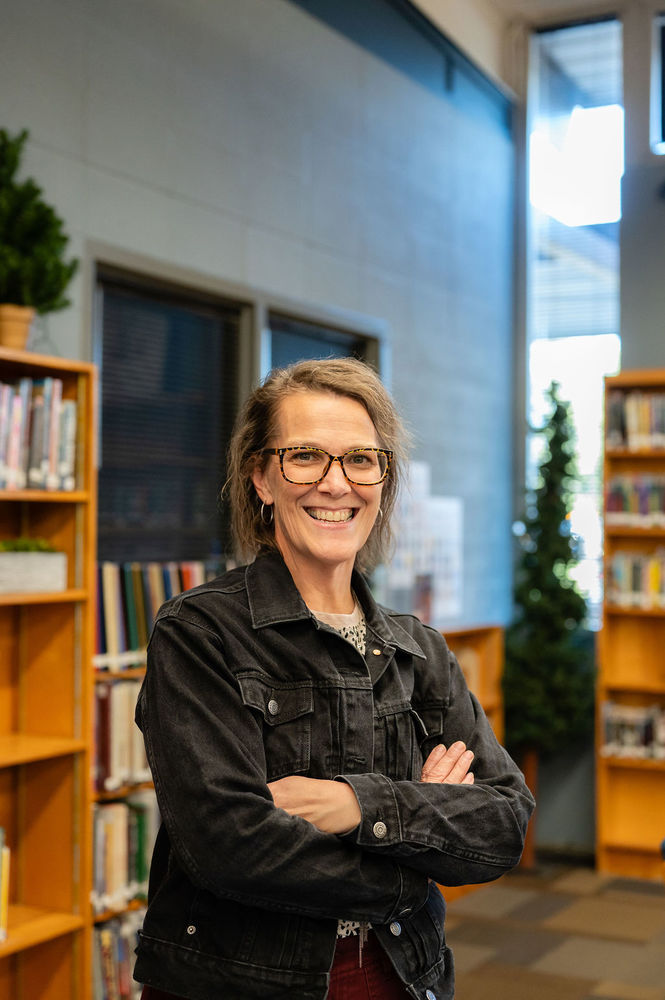
Paula Parker began her teaching career at a private school in metro Milwaukee. It was a demanding position, particularly challenging for a new teacher. “I remember I felt I needed to have all the answers. Now, after thirty-three years, I’ve learned that grappling with questions is part of what keeps us innovating as professionals.”
Two years into her position in Milwaukee, Paula interviewed at Hillsboro Elementary. She remembers telling her family after, that the district felt like "home". It may have been in part due to her grandparents’ ties to the Reedsburg area, but Mrs. Parker also felt a kinship with the people and mission she found here. “There was an atmosphere here that I felt immediately. You could feel the genuine care coming from the staff.” And Paula has been here ever since, raising her children in the district and building an extraordinary music program.
Today, Paula teaches choir to middle and high school students, and theater courses on alternating years. “My days involve working with three different performing groups: 6th-grade choir, junior high choir, and high school choir. Between these classes, I'm holding individual and small group vocal lessons, which allow me to understand each student's vocal identity, and any doubt or anxiety they have around singing or performance."
Mrs. Parker's dedication to building her music program around the abilities and interests of her students requires ongoing immersion in the latest exercises and trends. "I'm always on the lookout for repertoire, games, warm-ups, and lessons that will engage the singers. I have to be able to embrace some things that aren't my personal preference. For example, we've highlighted the measures "6-7" and developed exercises based on that trend. If it excites students, I'll use it. My goal isn't to cater exclusively to the next Broadway star, but help my students embrace music for themselves, for their own self-expression, joy, and growth."
Paula's love for music started early. She began learning piano and violin in first grade, and moved to trumpet and French horn in middle school. But it was singing that she loved most. It was an intuitive experience for her. She felt instinctively what science has confirmed - music plays a role in our well-being. Listening to music affects cognitive function, helping us interact more effectively with a vivid world. Music can help us regulate our moods, expand our personal and cultural identities, improve our memory, and be more innovative. "Music is a powerful tool that touches us at an intimate level. It can energize and inspire, but it is also a profound gift in times of hardship, offering us connection, comfort, and healing."
In her life outside of our doors, Paula treasures time with her family. “My husband and I spend many hours cheering on our four grandsons in their musical and athletic pursuits. Kids cherish family support and remember our presence even if it’s unspoken. I make time daily for reading and exercising. I enjoy composing my own music, and traveling when time allows.”
Over the course of her career, Mrs. Parker has fostered a love of music in thousands of students. "My passion for music and helping others led me to music education, to be able to integrate myself and my interests into a career. Observing students transform into confident, cultured musical connoisseurs is an amazing feeling, because it's something they carry with them throughout their life. The journey doesn't stop after graduation."